What’s it For?
Smart charging sequences coordinate when vehicles charge, how much power they receive, and the order in which charging occurs. By replacing uncontrolled plug-and-charge behaviour with automated charging plans, operators gain predictable fleet readiness while keeping energy demand within defined limits.
Why Charging Coordination Matters
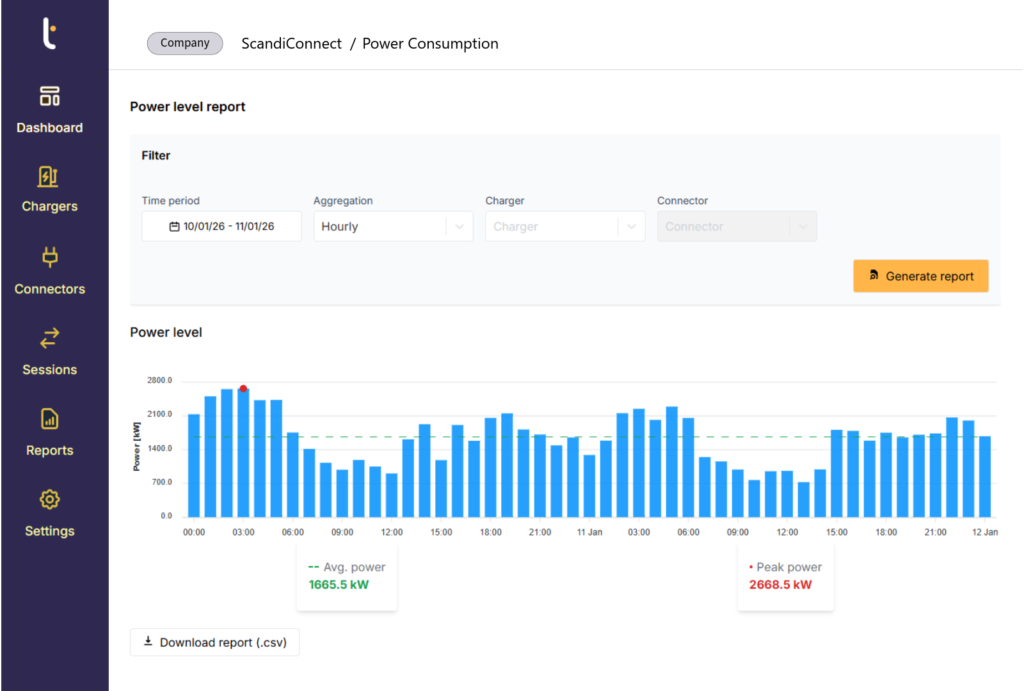
When charging is unmanaged, vehicles begin charging immediately at maximum power as soon as they are plugged in. This creates demand spikes, inefficient energy use, and increased operational risk. Operators are often forced to intervene manually to ensure priority vehicles are ready on time, which adds complexity and reduces reliability.
What Smart Charging Sequences Provide
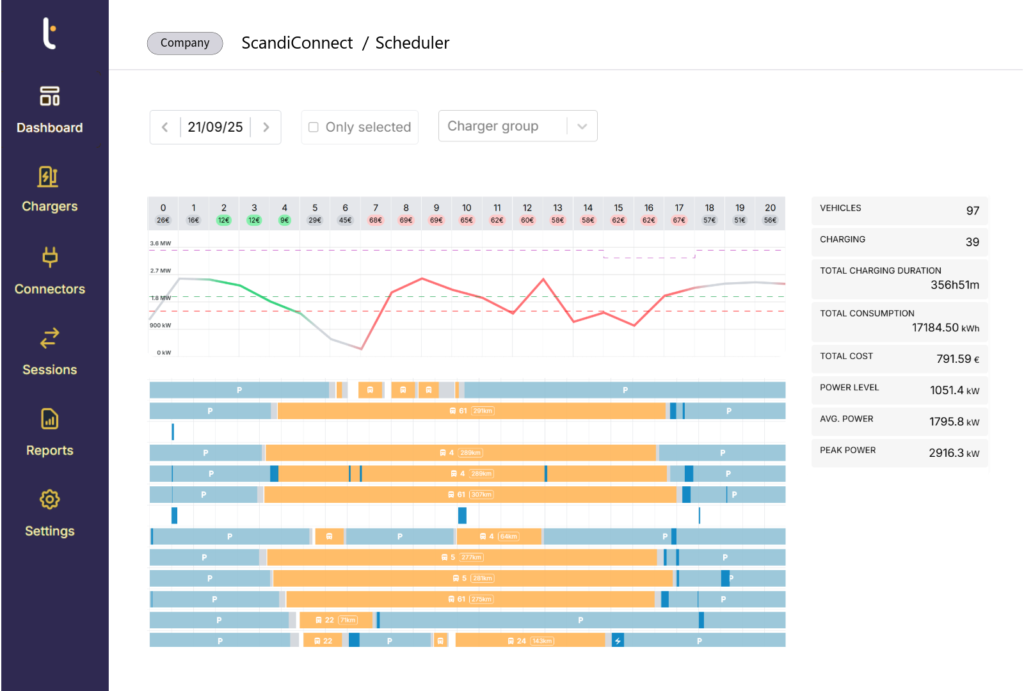
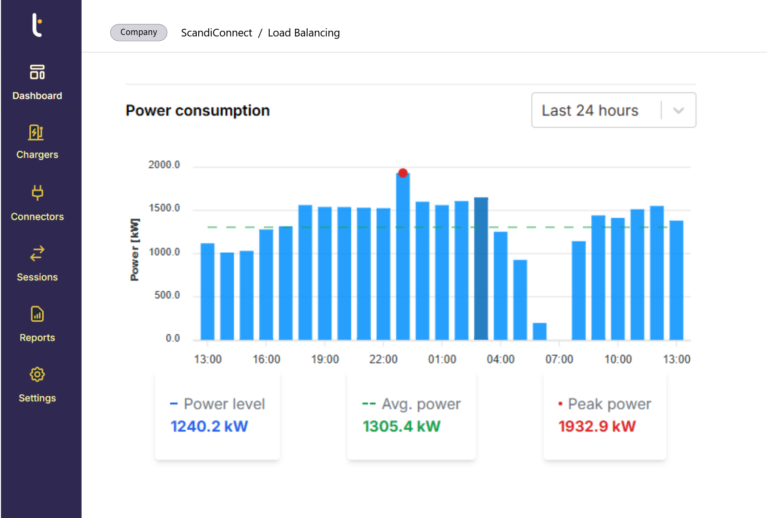
Smart charging sequences generate structured charging plans for each vehicle based on available power, time constraints, and operational priorities. Charging is distributed over the available time window rather than concentrated at plug-in, ensuring vehicles are ready when needed without overloading the infrastructure or increasing energy costs.
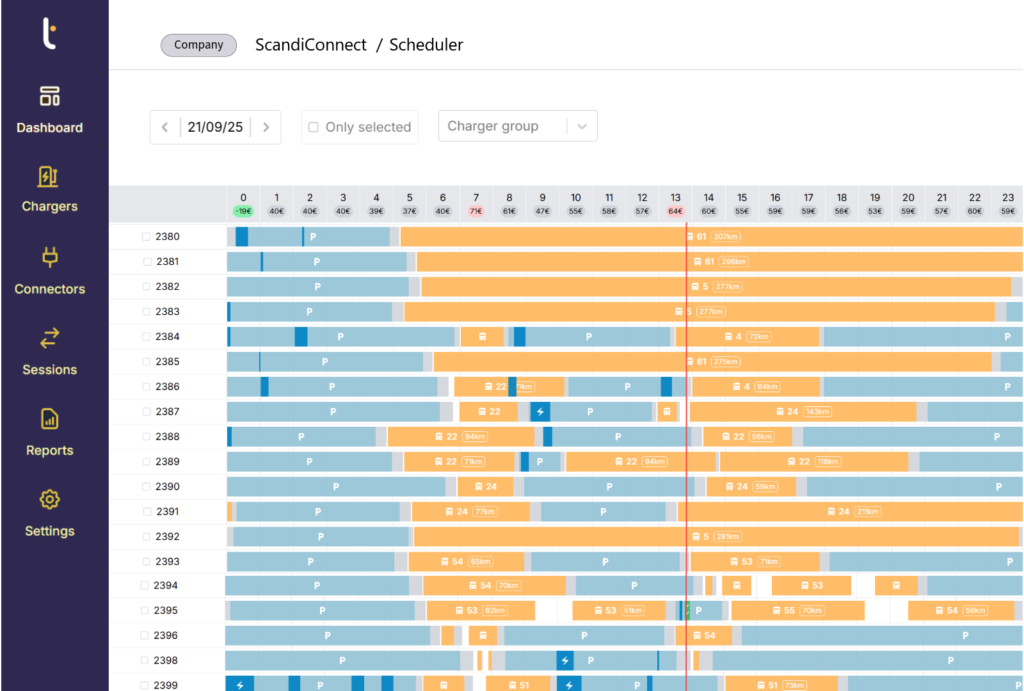
Full Integration with Scheduling Systems
Tenix integrates with leading scheduling systems such as Hastus, IVU, and Trapeze, ensuring that charging sequences are aligned with real-time operations. By connecting planning and charging data, operators can automatically optimize charging based on vehicle schedules, improving reliability while reducing energy costs.
How Smart Charging Sequences Works
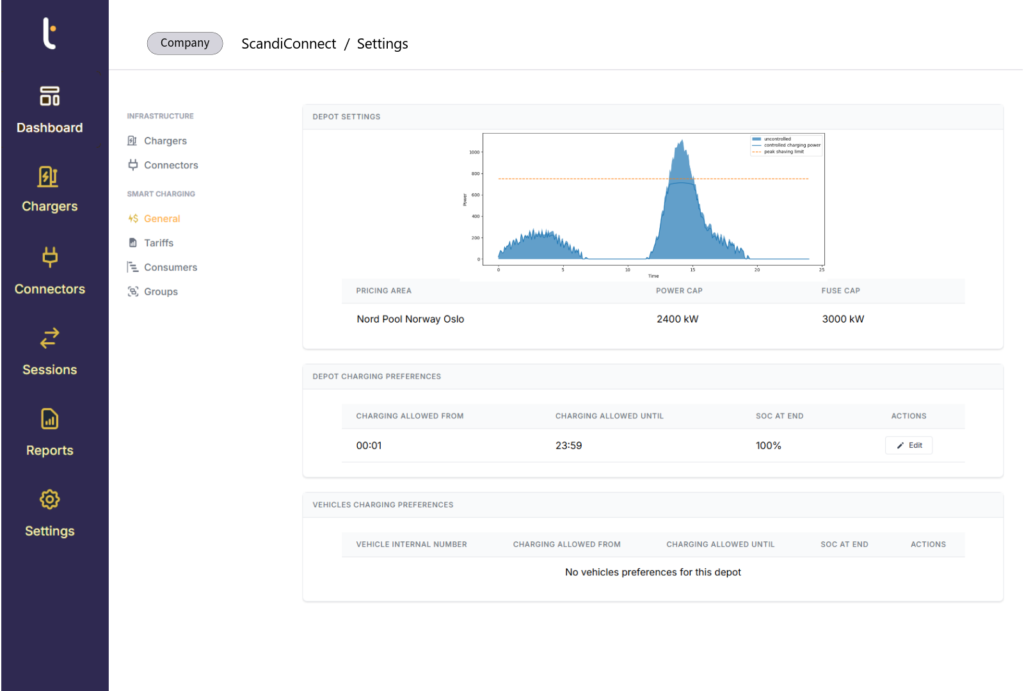
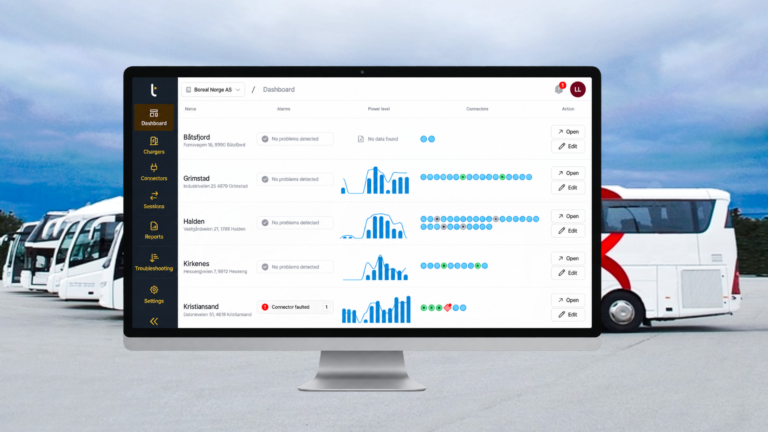
Charging preferences and power limits are defined at the depot, charger group, or vehicle level. When vehicles connect, Tenix Charge calculates individual charging plans and continuously recalculates them in response to changes such as vehicle arrival times, updated priorities, or power availability. Dashboards provide visibility into planned and active charging behaviour, allowing operators to intervene when necessary.
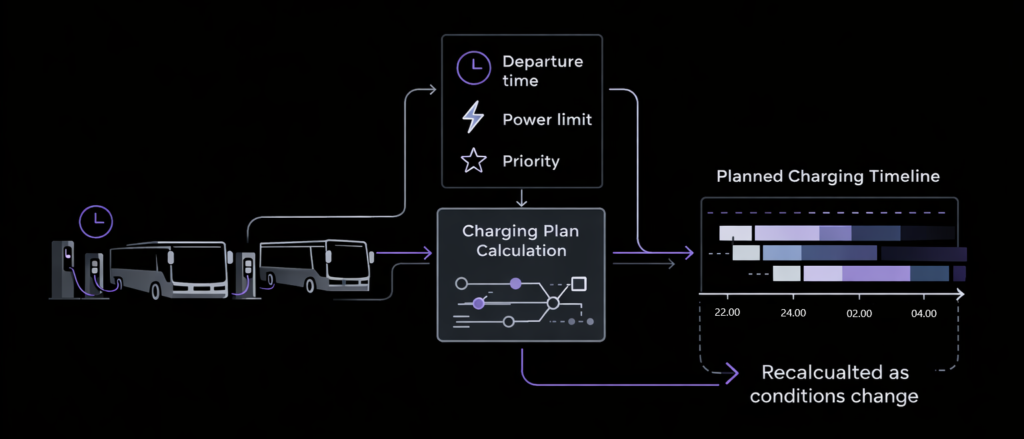
Key Capabilities
Balance operational priorities, energy constraints, and exceptions to ensure vehicles are ready when needed.
Automated Charging Plans
Charging schedules are automatically created to meet vehicle readiness targets.
Vehicle Prioritisation
Vehicles are dynamically proritised based on departure time and SoC requirement.
Manual Boost
Operators can override the plan to fast-track specific vehicles when needed.
Continuous Plan Recalculation
Charging plans are continuously recalculated in real time as data is updated.
Frequently Asked Questions
Got a different question? Just contact us and ask.
Does smart charging delay vehicles?
It might delay charging in order to minimize price or ensure power availability but it works to ensure that target SoC is met by the defined departure date.
Are other energy consumers taken into account?
Yes, Smart Charging Sequences can be set up to take into account other electricity consumers such as bus washing machines or workshops when calculating available power and charging plans.
Does the system only limit power, or can it also increase it if more power is available?
The system does both. It dynamically limits charging when capacity is constrained and increases available charging power when additional sources, such as on-site solar, are available.
Can charging priorities be changed?
Yes. Operators can override charging plans and adjust priorities when needed.
Explore
Resources for Improving Charge Operations
READY TO GET STARTED?
Join hundreds of satisfied operators using Tenix
To start the conversation, contact us.
Book a demo English (UK)
  Norsk bokmål
  Français