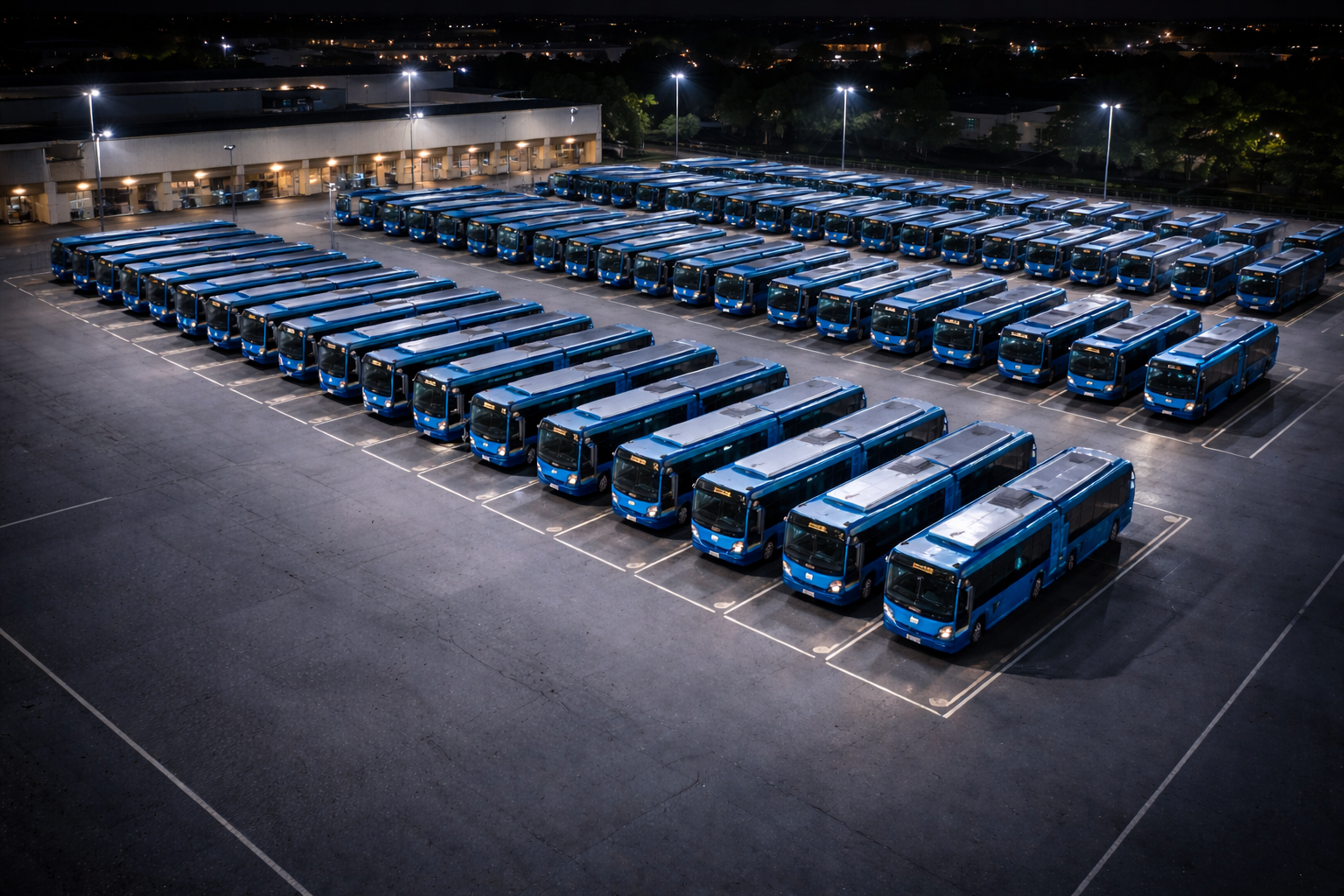
Across Europe, electric fleet grid capacity is becoming one of the most decisive factors in fleet operations, and anyone who has dealt with an electricity distribution operator will know that new connections and major upgrades are not quick fixes. They can take years. So, it is hardly surprising that many operators are now finding their depots hitting grid limits sooner than expected, while any plans for expansion are pushed further and further into the future.
This typically happens in depots that were electrified bit by bit, each step shaped by what seemed like sensible decisions at the time. First, a few electric vehicles; then, with new additions each year, the day arrives when the grid connection that once seemed more than enough becomes a hard ceiling.
Daily constraints
There was a time when, if you could secure enough power, you could tick the box and move on. Now, as electric fleets grow, grid limits are starting to shape the daily grind. More vehicles need to charge at the same depot, schedule changes are less predictable, and the windows for getting everything done are getting narrower. There is less room for mistakes, and even a single delay or unexpected hiccup can ripple through the whole operation. Operators often notice these problems first thing in the morning. Maybe one or two vehicles didn’t finish charging, or a route had to be changed at the last minute. Sometimes a charger fails during the night. On their own, these are minor issues. But in a depot that’s already stretched thin, they can cause delays, penalties, and operational firefighting. Worst case, power overload from too many buses charging can trip the fuse, and the whole depot loses power. A situation no depot manager wants to happen while everyone is sound asleep in bed at night.
Capacity you can’t add but must manage
For most operators, boosting grid capacity any time soon is simply off the table. But what they can control is how they use what they already have. This means looking at which vehicles need to charge first, how charging is prioritised when capacity is limited, and how exceptions are handled when charging is scheduled late in the day.
Without a clear view of grid capacity and fleet charging requirements, operators end up building in all sorts of buffers. They charge vehicles earlier than needed, keep extra vehicles on standby, or step in to fix things by hand. These workarounds are hardly efficient and add to the daily stress, but for many, they are the only way to muddle through when capacity is tight.
All of these buffers come at a price. Charging vehicles ahead of time only means you risk bumping up against peak rates. Keeping extra vehicles on hand is extra capex. Relying on staff to step in manually adds yet another layer of stress to their day. These are not sustainable fixes, but in depots where space and resources are tight, they have become the daily workarounds everyone just puts up with.
The difference a well-managed charging operation makes
Depots that can shift power around as needed, spot problems early, and adapt when things change are far better placed to cope with tight limits. Those who stick to rigid charging plans are left exposed when things do not go as expected. This is not about wringing every drop from the grid, no matter what. It is about making sure the power you have is used where it counts, so vehicles are ready to go, on time, every day.
A defining factor for the next phase of electrification
Grid capacity will still shape where fleets can grow, and how quickly. But more and more, it will also decide how reliably they run. As the industry moves from smaller electrification pilots to large, multi-depot electric operations, managing constraints is now just as important as the infrastructure itself.
Charge management has become a central part of running a fleet. The operators who come out ahead will be the ones who plan for these limits and build systems that can work confidently within them. Over the coming years, grid constraints will only increase as more industries electrify. Depot design, fleet planning, and daily operations will all be shaped by the assumption that capacity is limited and must be actively managed.
The role Tenix plays in managing electric fleet grid capacity
This is the day-to-day for us at Tenix: working alongside operators who are trying to keep electric fleets running in depots where the grid is already stretched thin, timelines for upgrades are anyone’s guess, and reliability is non-negotiable. The reality is that operations teams need to squeeze every bit of value from the capacity they have, whether that means making tough calls about which vehicles to prioritise, spotting problems before they become crises, or simply cutting down on the endless manual work that eats into everyone’s time. As grid constraints settle in as a fact of life for electric fleets, our job is to help operators keep things moving, even when there’s little room for error.




 English
  Norwegian