Fleet electrification is an ongoing process. Contracts end, fleets grow, tenders raise the bar on optimization and reporting. Operators sometimes need a new charge management system (CMS) that can keep pace with their operation, and sometimes that means switching.
The Moments That Trigger a Switch
The reasons are usually straightforward: a contract ends, operations have scaled beyond what the current system was built for, a new tender requires capabilities the existing platform doesn’t have, or additional depots and charger types need to be brought under one platform. In some cases, supplier support is no longer reliable or available.
At some point, most operators will revisit their CMS, and Tenix’s goal as a supplier is to make that transition as simple and pain-free as possible. When a CMS contract ends, whether it covers software only or a full operations and maintenance scope, it’s worth taking the time to benchmark what’s available. Evaluate features, support quality, and long-term fit, not just commercial terms. The right suppliers will actively collaborate to make sure the solution matches your operational requirements.
What Operators Need From Day One
Any new system must integrate without disrupting service. The new Charge Management System has to work with existing hardware from the start, deliver immediate visibility across chargers and vehicles, and be relied on to support the next day’s service. Weeks of onboarding and phased rollouts are not viable when the charging operation is already established, and operational processes are built around it.
Why Switching to a New Charge Management System No Longer Needs to be Complex
Open standards—specifically OCPP—mean that chargers are no longer locked to a single platform. Combined with cloud-native software and more mature charger firmware, it’s now possible to update the software layer without touching the hardware. Onboarding can happen remotely, configuration sits entirely in software, and the new system can be live in a single operational cycle.
How Onboarding With Tenix Works
The process starts with a single change, which is to update the OCPP endpoint on each charger to point to the Tenix backend. All that is required is access to the charger’s configuration. The moment that change is saved, the charger will show live in Tenix without the need to visit the site or interact with the hardware.
From there, the process follows two steps:
A Unit Verification Test (UVT) confirms that Tenix can communicate with each charger. This takes around 15 minutes in total and can be done entirely remotely. Once complete, live monitoring data from the chargers is available and verified.
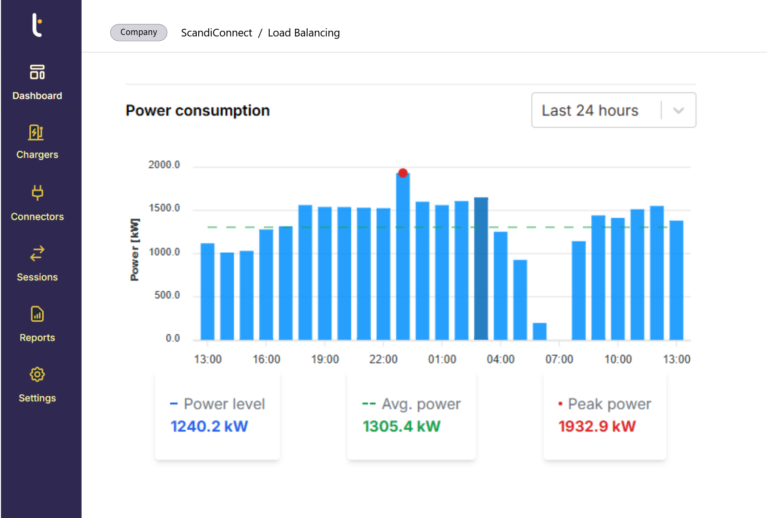
A User Acceptance Test (UAT) is then carried out to establish Tenix’s ability to actively control the chargers in the specific ways required by the user. This involves connecting the system to a small number of buses, with one person on-site to connect and disconnect vehicles from the charger. Once the UAT is complete and full access is confirmed, the full suite of smart charging functionality can be enabled: load balancing, peak shaving, scheduling integration, and automated charge optimisation.
From that point, Tenix configures the operational setup in parallel:
• Charger groups and depot structures are configured in Tenix
• Vehicle data is imported (battery capacity, consumption profiles, operational constraints)
• Charging logic is defined and aligned with route schedules and departure times
• Load management parameters are set to respect site capacity and grid limits
Because this configuration sits at the software layer, it can be completed rapidly and iterated in real time.
What Tenix Delivers From the Get-Go
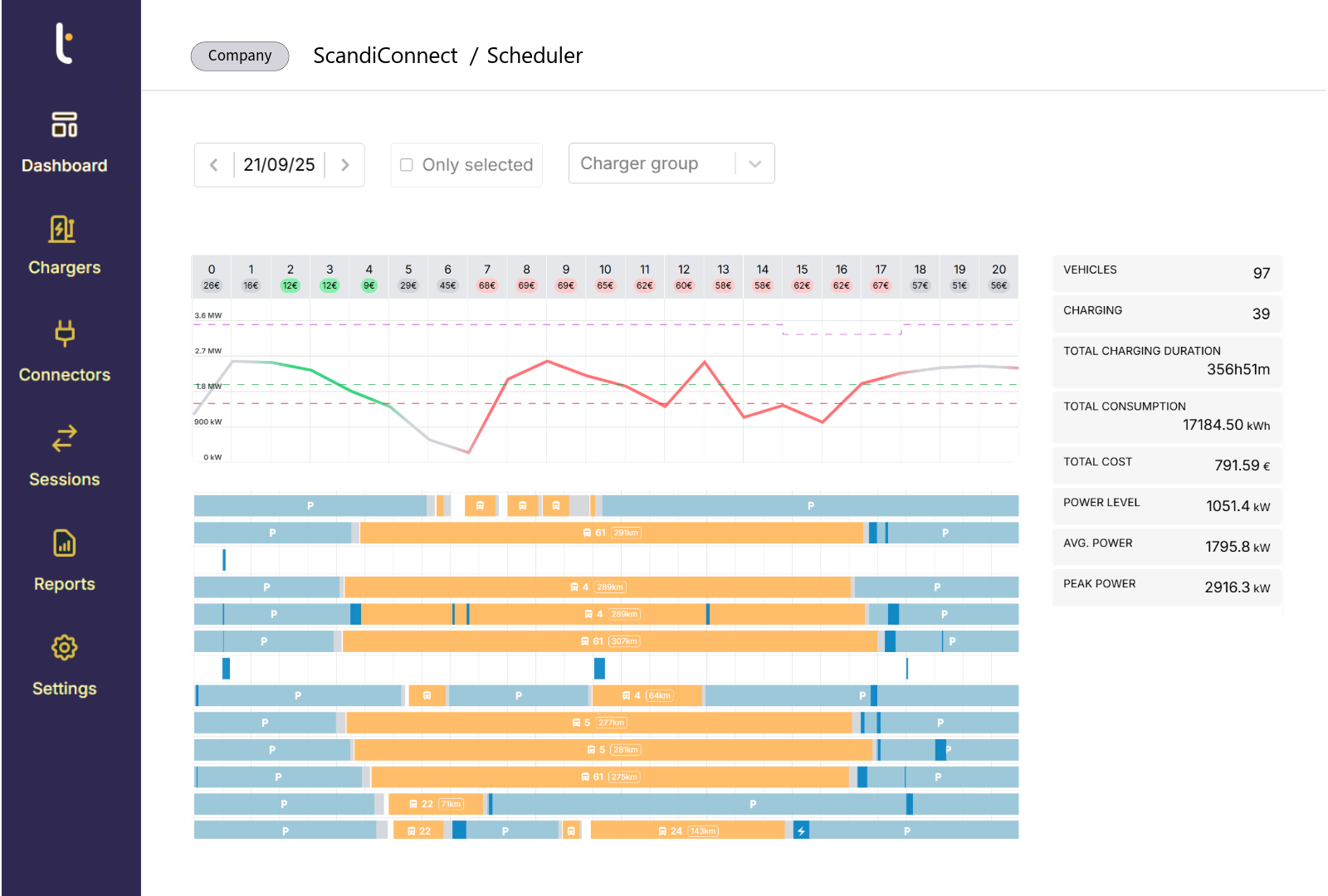
From the point of connection, Tenix provides immediate visibility across all chargers: live status, availability, power delivery, and session data. The second layer is smart charging, which is enabled once the additional setup is complete. This includes integration with the route scheduler and configuration of load management parameters, and is what unlocks charge planning based on actual route energy requirements, continuous progress monitoring against operational targets, early warnings on vehicles at risk of not being ready, and coordinated control across multiple chargers and depots.
A Note on Timelines
Tenix regularly supports customers adding new chargers, switching a complete system, or moving from a pilot to full-scale deployment, all without sending anyone to site. The process itself is not the bottleneck. The one dependency is access to the charger configuration: operators don’t always hold this directly and may need to request it from their charger provider. Getting that access in place ahead of time is the single most effective way to accelerate the transition.
When Requirements Change, Switching the CMS Should be Straightforward
Operators don’t switch systems often, and they shouldn’t need to. But when the time comes, the move to a new Charge Management System should be a technical step, not a complex project. With open standards and the right architecture, it can be completed in a day, without disrupting operations.
With Tenix, that transition is as simple as it should be.


 English (UK)
  Norsk bokmål
  Français