ELECTRIC BUS CHARGING OPERATIONS
Guide to Managing Electric Bus Charging Operations
In public transport, a missed departure carries immediate financial consequences. This guide covers what makes electric bus depot charging operationally demanding, the specific pressures that scale creates, and what well-run bus charging operations look like in practice.
Zero
Tolerance for departure failure in public transport contracts
100+
Charging decisions made every night in a large bus depot
Real-time
Fault detection gives teams time to act before departures are affected
30%
Typical energy cost reduction with smart charging management
THE CONTEXT
Why Electric Bus Charging Operations Demand a Different Approach
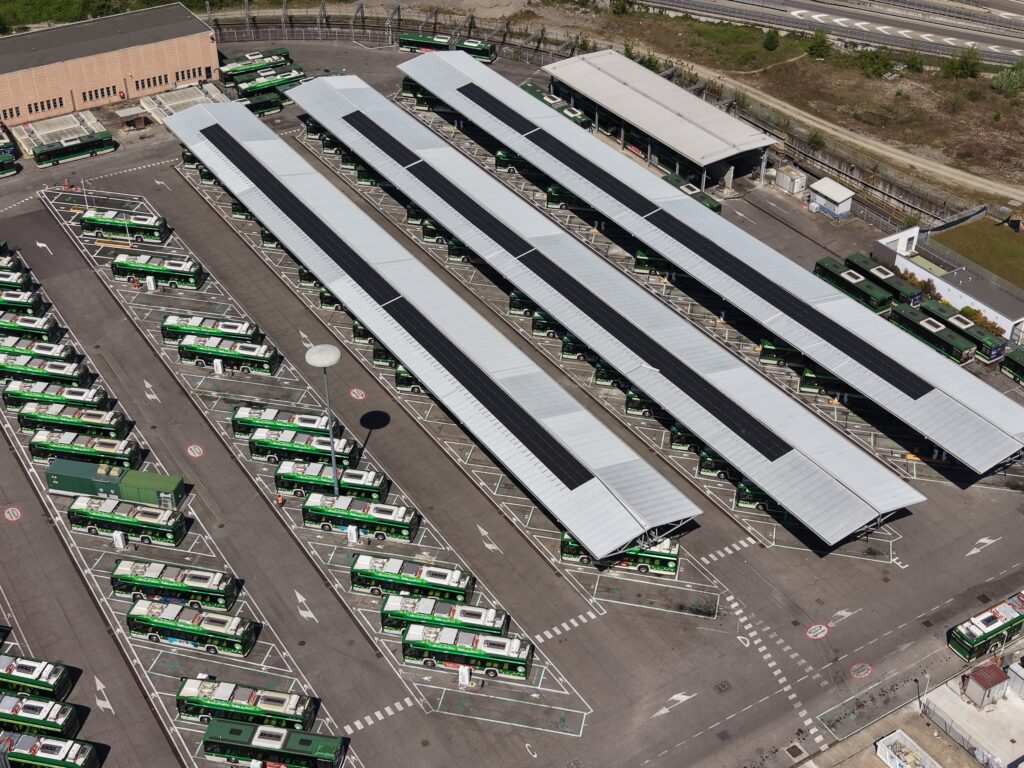
Bus charging operations face significant demands because of how public transport works. Fixed schedules, high vehicle utilisation, and the direct relationship between charging outcomes and service delivery leave very little room for error.
In public transport, timetables are binding commitments. The 05:47 departure leaves at 05:47, regardless of what happened in the depot the night before. That constraint means charging plans must be built around departure times, not around when charging happens to finish.
High vehicle utilisation compounds the pressure. Electric buses run long service days with minimal downtime between duties and few opportunities for midday top-ups. Most charging must happen overnight, and for buses on early morning routes that window can be as short as five or six hours.
Within it, the depot must charge the full fleet, manage grid capacity, prioritise by departure time and route energy requirement, and detect and respond to any charger faults, all without requiring staff to intervene overnight.
The sections that follow cover the operational disciplines that make this manageable.
WHAT GOOD LOOKS LIKE
The Principles of a Well-Managed Charging Operation
Depots that run reliably share a set of operational disciplines. None of them are technically complicated. What distinguishes them from depots that struggle is consistency, and the systems that make consistency possible at scale.
Charging is planned from the timetable, not from charger availability
Every charging decision starts with the question: what does this vehicle need, and when does it need to leave? Route energy requirements and departure times drive the plan. Charger availability is the constraint the plan works within, not the starting point.
Priority is assigned by operational need, not arrival order
Vehicles with earlier departures or higher energy requirements charge first. A bus departing at 05:30 on a 280 kWh intercity route takes precedence over one leaving at 08:00 on a 120 kWh urban loop, regardless of which one arrived at depot first.
Grid capacity is managed continuously
Available power is distributed dynamically across active charging sessions throughout the night. As vehicles reach their targets and reduce their draw, freed capacity is reallocated to vehicles that still need it. The depot operates at or near its grid ceiling continuously rather than spiking at arrival and sitting idle afterwards.
Faults are detected and resolved before they affect morning service
Every charger-vehicle connection is monitored throughout the charging window. When something goes wrong at 01:00, the depot team knows at 01:00, not at 05:10 when a driver reports an uncharged bus. The four hours between those two moments is where service failures are prevented.
Vehicles are charged to the charge they need instead of a uniform target
Charging every bus to 100% every night wastes energy and accelerates battery degradation. A well-managed operation charges each vehicle to the state of charge its route actually requires, keeping batteries in the optimal range and extending their useful life.
Reliability is measured and reported
Departure readiness rates, fault response times, and energy performance are tracked over time. That data has operational value, but it also has commercial value. It is the evidence base that demonstrates contract compliance and strengthens tender bids.

GETTING THE PLAN RIGHT
Charging Planning – Working Backwards from the Timetable
The starting point for a well-managed bus charging operation is a charging plan that reflects operational reality. That means connecting the charging system to the data that describes every vehicle’s route allocation, departure time, and the energy that route requires.
In practice, this means integrating the charge management system with the scheduling platforms that hold timetable and route data. Systems like IVU, Hastus, and Trapeze contain the information that makes per-vehicle charging plans possible. Without that integration, the charging system has no way of knowing that vehicle A needs 280 kWh by 05:30 and vehicle B only needs 120 kWh by 08:00. It treats all vehicles the same, which means some are overcharged, some are undercharged, and the allocation of available grid capacity bears no relationship to operational priorities.
With timetable integration, the charging plan is derived automatically each day from the actual service schedule. Priorities update as route allocations change. If a vehicle is reassigned to a longer route, its charging requirement increases automatically. If a departure is moved earlier, its priority increases. The plan reflects the operation as it actually is, not as it was last week.
This is the foundation. Everything else, load management, fault response, battery optimisation, depends on having a charging plan that starts from the right place.
MAKING THE MOST OF AVAILABLE TIME
Managing the Overnight Charging Window
The overnight charging window is the main operational constraint in bus depot charging. Most operators underestimate how little time is actually available until the fleet reaches significant scale.
Vehicles arrive in a concentrated period after the evening peak, typically within one to two hours. Early morning departures can begin as early as 04:30. In a large depot, the effective charging window for some vehicles can be as short as five to six hours, with part of that time lost to late arrivals, pre-service inspections, or repositioning within the depot.
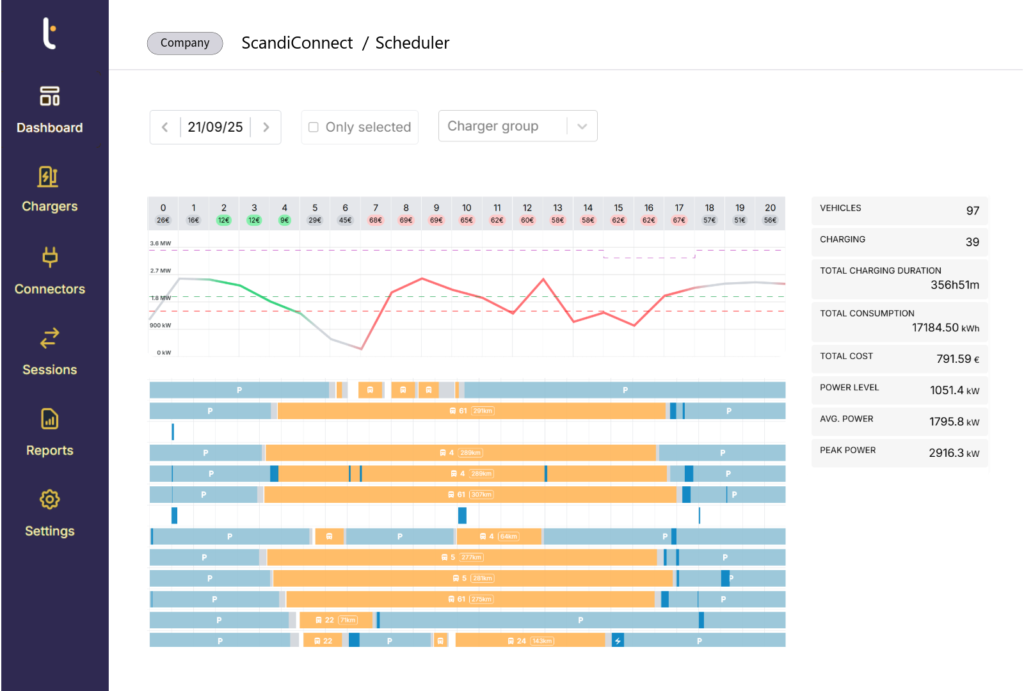
Managing that window well means distributing available grid capacity dynamically across the fleet throughout the night. As vehicles reach their required state of charge and reduce their draw, the freed capacity is reallocated automatically to vehicles that still need it. The depot operates continuously at or near its grid ceiling, maximising throughput without exceeding the grid limit.
Time-based optimisation is the other lever. Energy tariffs vary by hour, and the overnight window often includes periods where power is significantly cheaper. Shifting charging load towards those windows, while still meeting departure requirements, reduces energy costs without compromising vehicle readiness. For a 100-bus depot, the combination of dynamic load allocation and off-peak optimisation typically saves €8,000 to €10,000 per month on energy alone.

STAYING AHEAD OF PROBLEMS
Fault Detection and Response
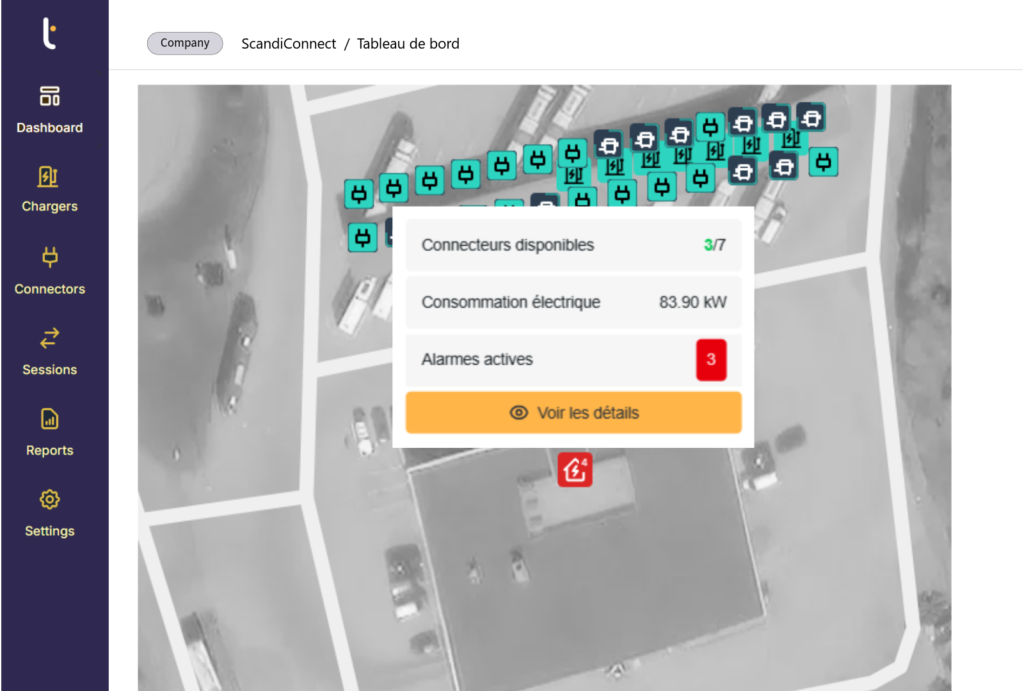
When a charger fails overnight in a bus depot, the consequences rarely stay contained to one vehicle. A charger stops mid-session at 01:00. The vehicle connected to it is scheduled for a 05:30 intercity service requiring 280 kWh. By 05:00 it has 160 kWh, enough for a shorter urban route but not the one it is allocated to. The depot manager must decide whether to cancel the service, reassign vehicles and accept the disruption to the rest of the morning, or send the bus out and hope for the best.
The same scenario with the fault detected at 01:05 has a completely different resolution. The vehicle can be reassigned, the route adjusted, or a manual intervention started in time to prevent a service failure. The fault is the same. The time available to respond makes all the difference.
Good fault detection in a bus depot requires monitoring at the session level, not just charger status. A charger that appears connected and active but is delivering 30% of its expected power is a fault in progress. Without session-level monitoring, it will not be detected until departure time. With it, the alert is raised within minutes of the fault developing.
The practical target for a well-run charging operation is that no vehicle arrives at departure undercharged due to a fault that was detectable overnight. That target is achievable with the right monitoring in place. It requires alerts that are raised early enough to act on, specific enough to understand, and filtered well enough that depot staff treat them seriously rather than ignoring them.
A fault detected at 01:00 is manageable. The same fault discovered at 05:10 when a driver reports an uncharged vehicle is a service failure. The four hours between those two moments is the operational value of real-time monitoring.
PROTECTING LONG-TERM FLEET VALUE
Battery Management as an Operational Discipline
The charging decisions made in a bus depot every night compound over time. Their impact on battery lifespan and replacement costs is one of the less visible but more significant consequences of how a fleet is managed.
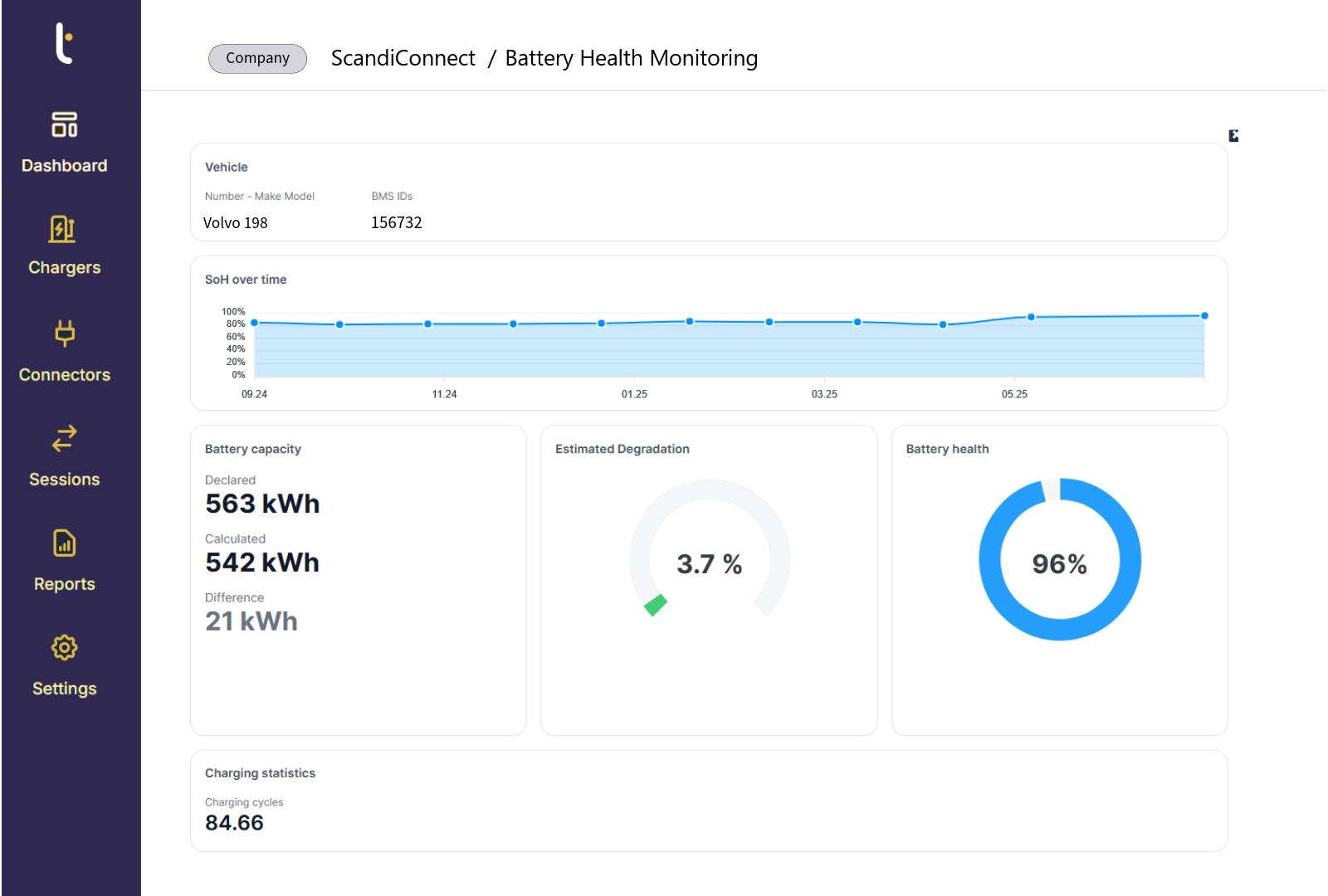
Electric bus batteries cost €80,000 to €120,000 to replace, and their lifespan is directly affected by charging behaviour. Frequent charging to 100%, extended time at high charge levels, and unnecessary fast charging all accelerate degradation. In public transport operations, the pressure is consistently towards full charge, with operators using 100% as a buffer against the risk of a vehicle leaving with insufficient charge.
The practical approach is to charge each vehicle to what its route actually requires. A bus on a 120 kWh urban circuit does not benefit from being charged to 100% when 75% is sufficient to complete the route and return. Charging it fully every night increases energy consumption and shortens battery life without improving service reliability.
Keeping batteries between 20% and 80% state of charge and charging each vehicle to its actual route requirement significantly reduces degradation. Across a 100-bus fleet, optimised per-vehicle charging can save up to €12 million in avoided battery replacements over the vehicles’ lifetimes, the result of better nightly decisions, made consistently, over several years.
€80-120k
Cost to replace an electric bus battery
20-80%
Optimal state of charge to minimise degredation
€12M
Potential battery saving across a 100-bus fleet lifetime

THE COMMERCIAL CASE
Measuring and Demonstrating Reliability
A well-managed charging operation does more than keep buses on the road. It builds the commercial record that determines whether an operator wins the next contract.
Public transport service agreements include KPIs around reliability, punctuality, and service availability. Charging failures contribute directly to performance against these measures, and transport authorities are increasingly sophisticated about identifying when reliability problems stem from operational management rather than vehicle faults. An operator whose charging operation is poorly managed carries that record into every subsequent tender.
The data that matters includes departure readiness rates—the percentage of vehicles that reach their required state of charge before their departure window— fault response times, energy performance trends, and year-on-year improvement across all three. Tracking these metrics serves two purposes. Operationally, they show where the charging operation is working well and where it needs attention. Commercially, they are the evidence that demonstrates contract compliance and builds the case in tender documentation.
Operators who can produce this data are in a stronger position than those who cannot. Getting charging right builds the operational evidence base that wins future contracts, not just delivers the current one.
About Tenix
Tenix: Built for Electric Bus Charging Operations
Tenix was developed with and for public transport operators, including Vy Buss and Connect Bus in the Nordics, where uptime and punctuality directly determine contract performance.
The platform integrates with scheduling systems including IVU, Hastus, and Trapeze, and derives charging plans from actual timetable and route data. Each vehicle is charged based on its route. Grid capacity is managed dynamically across the fleet throughout the charging window. Every charger-vehicle connection is monitored in real time, with alerts raised before faults reach the morning handover.
- Up to 30% reduction in energy costs
- Every vehicle charged to its route requirement, not a uniform target
- Real-time fault alerts before they become service failures
- Full ROI typically within six to nine months
- Works with any charger or vehicle brand, no vendor lock-in
See Tenix in action
Request a demo to see how Tenix manages electric bus charging operations at scale, from timetable-aware charging plans to real-time fault detection and multi-depot coordination.
Book a demoOr contact us at sales@tenix.eu · +47 4777 0070
Explore
 English (UK)
  Norsk bokmål
  Français